Click-Type Torque Wrench

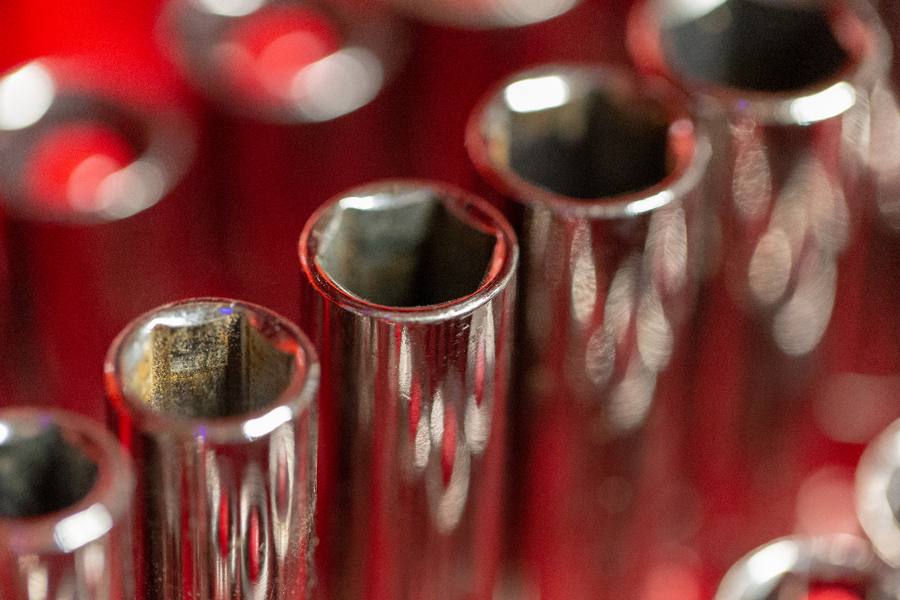
Temsili görsel (stok fotoğraf); ürünün kendisi değildir.
Why Torque Is Specified
A bolt works by being stretched to a specific tension, which clamps the joint. Too little and it loosens; too much and the bolt yields or the thread strips.
Wheel nuts are the case most people encounter, where under-tightening allows a wheel to work loose and over-tightening stretches studs and warps brake discs.
A torque wrench is how that specification is met rather than guessed, and guessing by feel is unreliable even for experienced mechanics.
The Impact Gun Problem
Tyre fitters frequently use impact guns without torque limiting, which routinely over-tightens wheel nuts well beyond specification.
That is why a nut that was fitted at a garage can be almost impossible to remove at the roadside, which is exactly when you need to remove it.
Rechecking wheel nut torque yourself after any tyre work is worth doing, and it is also why many people torque their own wheels afterwards.
Storing It At Zero
Click-type wrenches use a calibrated spring, and leaving the wrench set at a high torque keeps that spring compressed and causes it to lose accuracy over time.
Winding it back to the lowest setting — not below it — after every use is the standard practice, and it is the single thing that keeps a wrench accurate for years.
They also need recalibration periodically, and a wrench dropped onto a hard floor should be treated as suspect until checked.
Correct Technique
The wrench should be pulled smoothly with the hand at the end of the handle, since gripping partway along changes the effective length and therefore the applied torque.
It should be stopped at the click rather than pulled through it, and one click is the reading — continuing applies more torque than intended.
Torque wrenches are for final tightening only and should never be used to loosen bolts, which damages the mechanism.
Range And Buying Sensibly
Wrenches are most accurate in the middle of their range and least at the extremes, so a wrench should be chosen so the torques you use sit centrally.
One wrench cannot cover both small engine fasteners and wheel nuts accurately, which is why people end up with two in different ranges.
For most car owners a wrench covering the wheel nut range is the one that matters, and a second smaller one follows only if you do engine work.
Tightening pattern matters as much as the figure on wheels, because tightening nuts in sequence around the circle pulls the wheel onto the hub unevenly and can leave it sitting slightly off true. The correct method is tightening diagonally opposite pairs in a star pattern, in two or three progressive passes, finishing at full torque on the final pass. It takes no longer than doing it wrong and it is what seats the wheel properly against the hub face.
The Verdict
A necessary tool for anybody doing their own wheel or mechanical work, because torque specifications exist for reasons that matter.
It must be wound back after use, used only for tightening, and chosen so your torques sit mid-range rather than at the extremes.
Wind it back to the lowest setting every time. A wrench stored under tension loses accuracy, and an inaccurate torque wrench is worse than none.
Bir bakışta
Artılar
- Meets specified torque rather than guessing by feel
- Audible click is unambiguous
- Prevents both loosening and stud stretching
- Lets you correct over-tightened nuts from a tyre fitter
Eksiler
- Loses accuracy if stored under tension
- Needs periodic recalibration
- Least accurate at the extremes of its range
- One wrench cannot cover all fastener sizes
Sıkça sorulan sorular
Why does torque matter?
A bolt clamps by being stretched to a specific tension. Too little and it works loose; too much and the bolt yields or the thread strips. On wheels, over-tightening stretches studs and warps brake discs, and under-tightening loses a wheel.
Why is my wheel nut so tight?
Tyre fitters often use impact guns without torque limiting, which routinely over-tightens well beyond specification. That is why a garage-fitted nut can be impossible to shift at the roadside, which is exactly when you need it off.
How do I keep it accurate?
Wind it back to the lowest setting after every use, since a compressed spring loses calibration over time. Never use it to loosen bolts, and treat it as suspect if dropped until it has been checked.
Teknik Özellikler
| Type | Click-type torque wrench |
| Purpose | Final tightening to specification |
| Never use for | Loosening fasteners |
| Storage | Wound back to lowest setting |
| Technique | Smooth pull, hand at the handle end, stop at first click |
| Accuracy | Best in the middle of the range |
| Most useful range | Wheel nut torques |
| Calibration | Periodic; suspect after a drop |
Özet
Meets specification rather than guessing, which matters on wheels. Wind it back to zero every time or it loses accuracy.
Amazon'da Fiyatı Kontrol Et