Image illustrative (photo de stock) ; ce n'est pas le produit exact.
The Legal Limit Is Not The Safe Limit
Most jurisdictions set a minimum legal tread depth, and wet braking performance deteriorates significantly well before a tyre reaches it.
Testing consistently shows substantially longer wet stopping distances on tyres near the legal minimum compared to those with more tread, and aquaplaning resistance falls away sooner still.
Replacing before the legal limit rather than at it is a safety decision rather than an extravagance, particularly for anybody driving in wet conditions regularly.
Measure Across The Width
A tyre rarely wears evenly, and measuring at one point tells you very little. The measurement should be taken across the inner, centre and outer sections.
Legal requirements typically apply to the central portion of the tread, and a tyre legal in the centre can be worn beyond limits at the edges.
The inner shoulder is the one that hides, since it faces away and is difficult to see without turning the wheel to full lock, and it is where alignment problems show first.
Wear Patterns Diagnose Problems
Wear on both shoulders with a good centre indicates persistent underinflation. Wear in the centre only indicates overinflation.
Wear on one shoulder only indicates an alignment problem, which will continue destroying tyres until it is corrected.
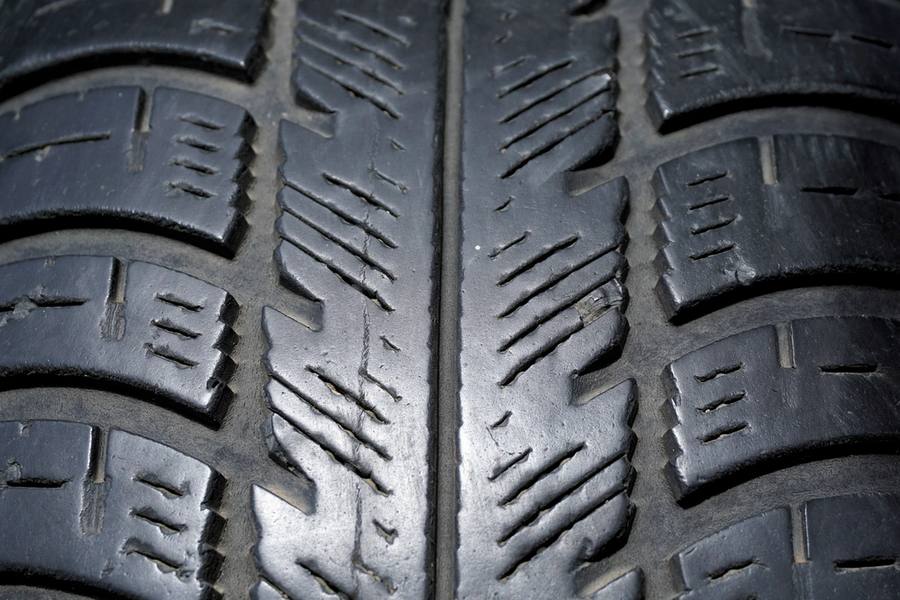
Feathering, where tread blocks wear to a sawtooth edge you can feel by running a hand across, indicates a toe alignment issue and is detectable by touch before it is visible.
Tread Wear Indicators
Tyres have moulded bars in the grooves at the legal minimum depth, and when the tread wears level with them the tyre is at the limit.
Those indicators are useful as a final warning and are not a substitute for measurement, because they only tell you the tyre is finished rather than how much life remains.
A gauge tells you whether a tyre has months or weeks left, which is what allows planning replacement rather than discovering it at a test.
Age As Well As Depth
Rubber hardens and cracks with age regardless of tread depth, and a tyre with plenty of tread that is many years old has reduced grip and increased failure risk.
The manufacture date is moulded into the sidewall as a four digit code giving week and year, and it is worth knowing how old your tyres actually are.
Low-mileage vehicles, caravans and classic cars frequently run tyres that are legal on tread and dangerously old, which is a genuine and underappreciated risk.
Rotation is the maintenance that extends tyre life most and is routinely skipped, because front and rear tyres wear at very different rates on most vehicles. Moving them around according to the manufacturer's recommended pattern at service intervals evens out that wear and means a set is replaced together rather than in pairs at different times. It costs nothing when a wheel is already off for another reason.
The Verdict
A very cheap gauge that tells you both how much tyre life remains and, through wear patterns, what the car is doing to its tyres.
The legal limit is not a safe target, measurement must be taken across the width, and age matters independently of tread.
Check the inner shoulder. It faces away, wears first when alignment is out, and is where a tyre fails its test while looking fine from outside.
En un coup d'œil
Avantages
- Shows remaining life rather than just pass or fail
- Wear patterns diagnose inflation and alignment problems
- Very cheap and lasts indefinitely
- Allows planned replacement rather than a surprise
Inconvénients
- Must be measured at several points across the width
- Does not assess age-related hardening or cracking
- Cheap gauges can be imprecise at small depths
- Does not detect internal damage
Questions fréquemment posées
Is the legal minimum safe?
Wet braking deteriorates significantly before a tyre reaches it, and aquaplaning resistance falls away sooner still. Replacing before the legal limit rather than at it is a safety decision, particularly for regular wet driving.
Where should I measure?
Across the width — inner, centre and outer. Tyres rarely wear evenly, and one legal in the centre can be worn beyond limits at the edges. The inner shoulder faces away and is where alignment problems show first.
What does uneven wear mean?
Both shoulders worn means underinflation; centre worn means overinflation; one shoulder only means an alignment fault that will keep destroying tyres until corrected. A sawtooth feel across the blocks indicates a toe problem.
Spécifications
| Type | Tread depth gauge |
| Measure at | Inner, centre and outer across the width |
| Legal limit | Not a safe target; replace earlier |
| Shoulders worn | Persistent underinflation |
| Centre worn | Overinflation |
| One shoulder worn | Alignment fault |
| Feathering | Toe alignment; detectable by touch |
| Also check | Sidewall date code for age |
Résumé
Measure across the width, replace before the legal limit, and check the inner shoulder — it wears first and hides.
Vérifier le prix sur Amazon