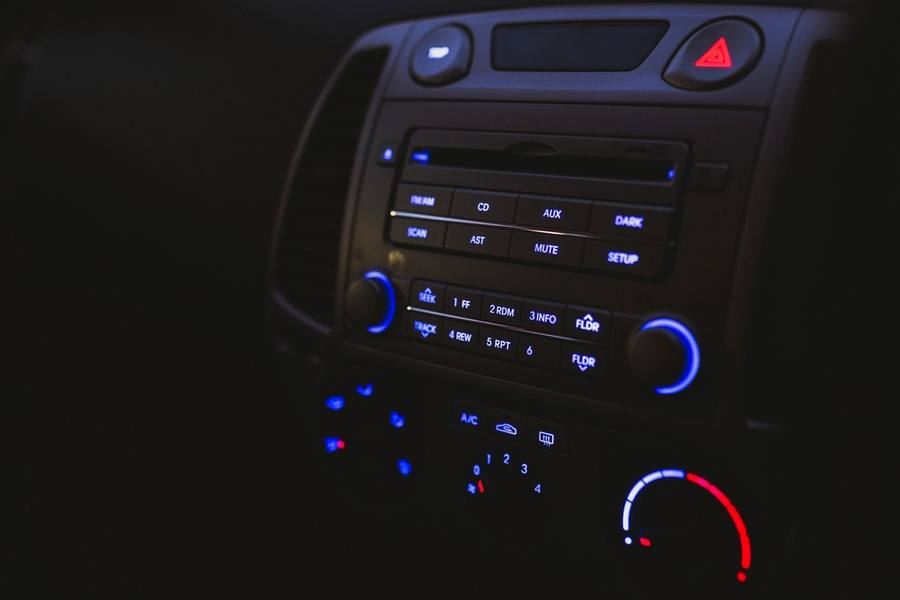
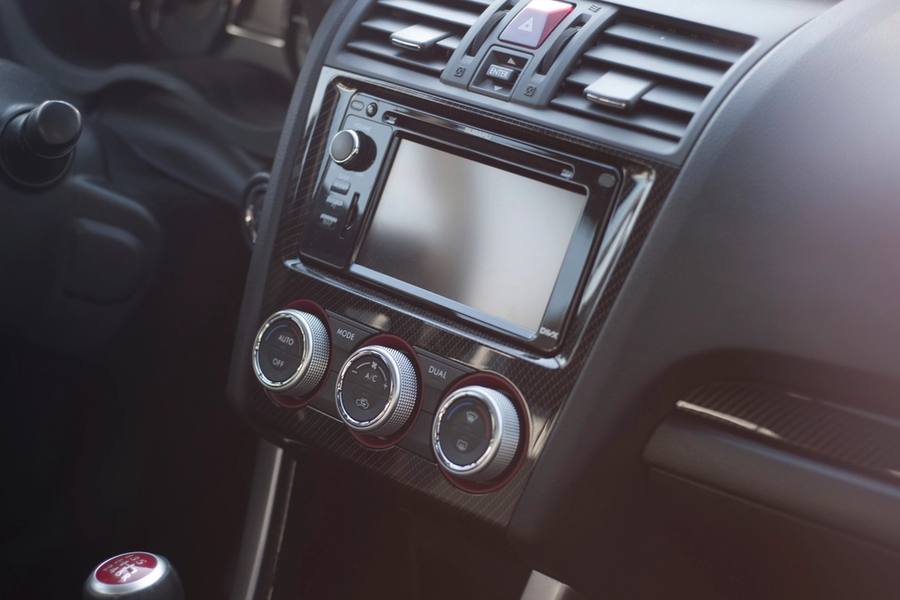
Head Unit with Wireless Phone Integration
Representative image (stock photo); not the exact product.
What It Actually Modernises
Phone projection puts navigation, music and messaging on the dashboard screen with voice control, which in an older car is a substantial change to how it is used daily.
It also replaces a head unit whose amplification and digital conversion are frequently decades old, which improves sound before any speakers are touched.
For a car otherwise in good condition, this is one of the few upgrades that meaningfully changes daily use rather than being a detail.
Wireless Versus Wired Projection
Wireless connection means the phone stays in a pocket and connects automatically, which for short journeys is the difference between using it and not.
It drains the phone battery faster than a wired connection, which charges while projecting, and on long journeys a charging cable is still wanted.
Wireless connection is also slightly slower to establish and occasionally needs a reconnect, which wired never does.
Adapters Are Where Installations Go Wrong
Modern cars integrate the stereo with steering wheel controls, parking sensors, climate display, vehicle settings and amplification.
Replacing the head unit without the correct interface adapter loses some or all of those, and steering wheel controls in particular are the commonly lost function.
Vehicle-specific adapters retain them, and the cost of the correct adapter is a necessary part of the budget rather than an optional extra.
Fascia Kits And Fit
A fascia adapter makes an aftermarket unit fit the dashboard aperture, and quality varies enormously — a poor one leaves visible gaps and looks obviously aftermarket.
Some modern dashboards integrate the screen so completely that no aftermarket unit fits acceptably, and in those cars the upgrade is not practical.
Checking what fascia kits exist for your specific model before buying a head unit is the right order, since the fascia is the constraint.
Screens, Glare And Distraction
Large bright screens are the trend, and a very large screen in a small car can reflect in the windscreen at night and dominate the interior.
Automatic brightness and a proper night mode matter considerably for anybody driving in the dark regularly.
Digital radio support is worth checking on units sold in markets where it matters, since analogue broadcasting continues to be reduced in several countries and a new head unit without it is dated on the day it is fitted. Many units require a separate aerial for digital reception, which is an additional part and an additional cable run, and discovering that requirement after the dashboard is already apart is considerably more annoying than planning for it beforehand.
Interacting with a touchscreen while driving is a genuine distraction, which is why voice control and steering wheel controls matter more than screen size.
Reversing camera support is worth checking if the car does not already have one, because most modern head units accept a camera input and will switch to it automatically when reverse is selected. Adding a camera at the same time as the head unit means the cable run through the car is done once rather than twice, and on an older vehicle without parking sensors it is probably the single most useful addition alongside the phone integration.
The Verdict
A genuinely transformative upgrade for an older car, adding modern navigation and audio while improving sound quality.
Adapters and fascia kits are essential and easily underestimated, wireless drains phone battery, and some modern dashboards cannot accept one at all.
Check the fascia kit and integration adapter for your car before choosing a unit. Those determine what is possible, not the head unit features.
At a glance
Pros
- Adds modern navigation, music and messaging with voice control
- Improves sound before touching speakers
- Wireless connection works automatically on short trips
- Transformative for an otherwise good older car
Cons
- Loses steering wheel controls without the right adapter
- Fascia kit quality varies and some cars have none
- Wireless projection drains phone battery
- Large bright screens reflect at night
Frequently asked questions
Will I lose my steering wheel controls?
Without the correct vehicle-specific interface adapter, yes — and they are the most commonly lost function. The adapter retains them along with parking sensors and other integrations, and its cost is a necessary part of the budget.
Wireless or wired projection?
Wireless for short journeys, because the phone stays in your pocket and connects automatically. It drains the phone faster, so on long trips a cable is still wanted — wired charges while projecting and never needs reconnecting.
What should I check first?
Whether a good fascia kit exists for your specific model. Some modern dashboards integrate the screen so completely that no aftermarket unit fits acceptably, and the fascia is the constraint rather than the head unit.
Specifications
| Type | Aftermarket head unit with phone projection |
| Connection | Wireless and wired options |
| Essential extras | Vehicle-specific integration adapter and fascia kit |
| Commonly lost | Steering wheel controls |
| Improves | Sound quality before speakers |
| Check first | Whether a fascia kit exists for your model |
| Night driving | Automatic brightness matters |
| Safety | Voice and wheel controls over touchscreen |
The bottom line
Transforms daily use in an older car. Check the fascia kit and integration adapter for your model before choosing a unit.
Check Price on Amazon